Barn and Shed Roofs
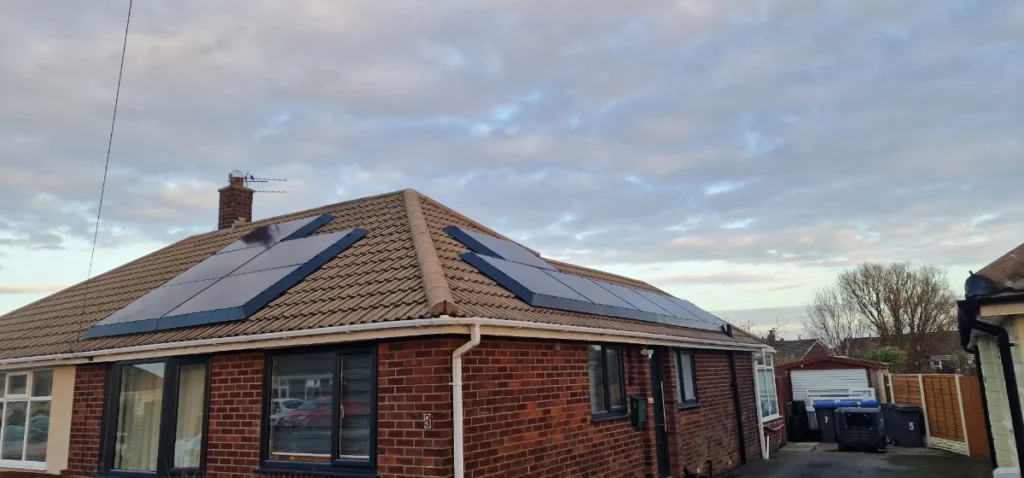
Most agricultural roofs can take panels under permitted development. We check the structure and the sheeting first, because a roof that needs replacing in five years should be sorted before the panels go on.


Barn roofs, field arrays, farmhouses and holiday lets. We design solar and battery systems around the way your property uses power through the day and the year, and we handle the planning and grid paperwork.
Farms use most of their electricity in daylight, which is when panels produce it.
Milking parlours, bulk tanks, grain dryers and workshops all draw power through the working day. When panels on the shed roof cover that load directly, you use the electricity on site and save the full unit price, and that's where most of the payback on a farm system comes from.
Rural properties also have the space. A big portal-frame shed can take a system of 30 to 50kW. Where the roofs are shaded or face the wrong way, a ground-mounted array in the corner of a field is another option.
Rural businesses on our client list include Lune Valley Pods, The Red Well Country Inn, Knolton Farmhouse Cheese and Eden Grange Fishery.


Your Options
Most farms have more than one good spot. We'll look at all of them and show you what each would produce.
Most agricultural roofs can take panels under permitted development. We check the structure and the sheeting first, because a roof that needs replacing in five years should be sorted before the panels go on.

Panels in a field can face due south at the ideal angle, well clear of trees and buildings. They need planning permission above 9 square metres, and we prepare the application for you.

The house follows the home rules and qualifies for 0% VAT until 31 March 2027. Plenty of farms do both: a modest system on the house and a bigger one on the sheds.
Who It Suits
The best candidates run power-hungry kit in daylight hours and have roof or ground space to spare.
Milking, milk cooling and water heating run every day of the year, so the panels have a steady load to cover.
Grain drying and storage put heavy loads on the supply at harvest, and big sheds give you the roof space for a large system.
Guests expect hot showers, warm cabins and somewhere to charge the car. Solar and a battery cut the running costs of pods, lodges and cottages.
Kitchens, cellar cooling and lighting run through the day and into the evening. A battery carries the solar on past sunset.
Cold rooms, chillers and processing equipment run all day. Every unit the panels cover is one you don't buy at business rates.
Homes on storage heaters or other electric heating have big bills to cut, and most rural houses have the roof space to do it.

Rural supplies run on long overhead lines, and when a storm brings one down, the properties at the far end can wait longest.
After Storm Arwen in November 2021, almost 4,000 homes in northern England and north-east Scotland were without power for more than a week.
A standard solar system switches off in a power cut, for safety. Batteries with a backup function can keep chosen circuits running, such as the fridge, freezer, lights and broadband, and larger systems can be designed around critical farm loads. If backup matters to you, we build it into the design from the start. See our battery storage systems.
How It Works
We run the whole job, including the planning and grid applications most farms would rather not deal with.
We walk the site, look at every roof and field corner, and go through your bills or half-hourly data to see when you use power.
We size the system, check permitted development and prepare any planning application. Larger systems need network operator approval before they connect, so we apply early.
We plan the work so it doesn't clash with lambing or harvest, and we keep yards and machinery routes clear while we're on site.
You get the monitoring app, the certificates and a walk-through of the system. We keep an eye on performance after that.

Got Questions?
What farmers and rural business owners ask us before they commit.
We'll walk the farm with you, look at the roofs and the ground, and come back with a design, the figures and a clear answer on planning.
Arrange Your Visit